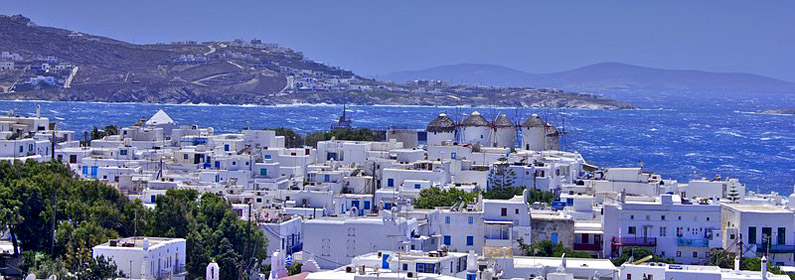
 Mykonos is the Perfect Place to Pop the Big Question Mykonos is the Perfect Place to Pop the Big Question
Have you been dating your partner for a while and you are seriously
considering asking for their hand in marriage? It's a big step to take
for anyone, and it certainly brings about anxiety and the range of
feelings... read more
Mykonos
Greece, Playground island of the Cyclades Islands by S Pappas
Mykonos island has become
Greece's best known Playground Greek island, an unsurpassed tourist
destination. Much of its history has been fairly peaceful and unnoticed,
yet the island has been able to be reinvented as a cosmopolitan center.
Here the old and new intersect and delight.
How
does an island made of granite, with a shortage of fresh water, and
relies on desalination, become a world renown destination? By offering
clean beaches surrounded by pristine waters perfect for windsurfing and
diving. By offering upscale, expensive amenities as well as traditional
tavernas, night clubs and beach bars featuring internationally known DJ's
and loud music. By being known for nude beaches. Mykonos Greece has
earned the reputation of being Greece's playground island.
Most
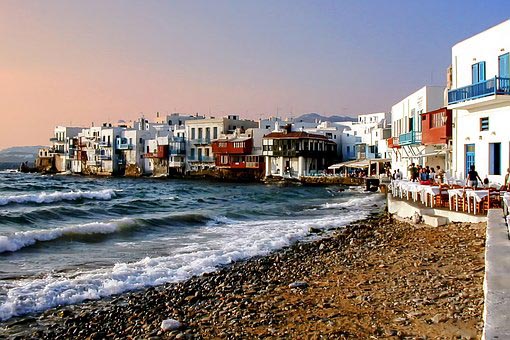
descriptions of Mykonos island make some reference to the color
white...white washed roads, chalk-white beauty, soft, white sands,
dazzling white buildings are all included in the many descriptions of
this Greek Aegean island.
Not
bad for Greek island originally known as a simple supply station and
retreat for the ancient people of nearby Delos.
Mykonos
island means "Mass of Stones." It was named for Apollo's
grandson, Mykonos. Mykonos was the son of the King of Delos.
According
to mythology, this Greek island is the site of a great battles between
Zeus and the Gigantes. Another legend tells us that the Giants killed by
Hercules are buried here. Are these the masses of stones?
What
we do know is that archaeologists have found the remains of the
settlements of the neolithic Kares tribe here. We know Ionians settled
here in 1100 BC. Ancient people worshiped Dionysus, Demetra, Zeus,
Apollo, Poseidon, and Heracles.
As did
many of the Aegean islands, Mykonos island passed from Roman to Byzantine
to Venetian possession. None saw Mykonos island as having much
significance since it was never agriculturally important. More modern
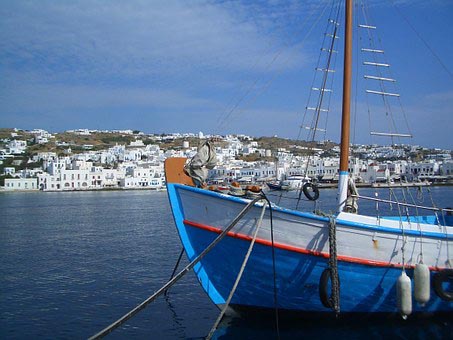
Greeks, excellent traders and sailors, used Mykonos Greece as a point
from which to establish trade with Constantinople, Smyrna, Alexandria,
Marseilles. World War I brought a depression which ended much of this
business.
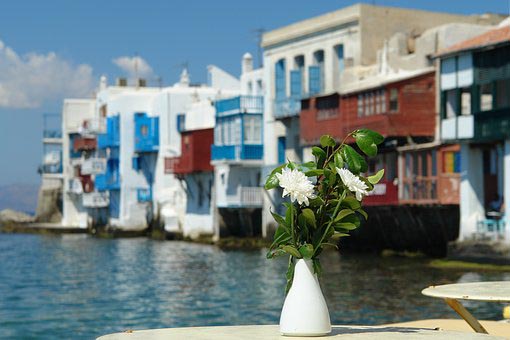
But in
recent times, the people of Mykonos island in Greece have reinvented this
Greek island as the cosmopolitan center of the Cyclades. Myconos island
is small and beautiful and easily explored. Narrow paths through he towns
both confuse and enchant visitors. Old paths cover much of the island
making exploring the natural world easy and enjoyable. One can hike and
encounter local lizards sunning themselves on Classical Greek ruins. It
is this combination of rural beauty and classical culture that has
created modern Mykonos Greece.
The
capital city, also the largest town on the island, is called Hora, or
referred to as Mykonos or Myconos. It lies on the west coast.
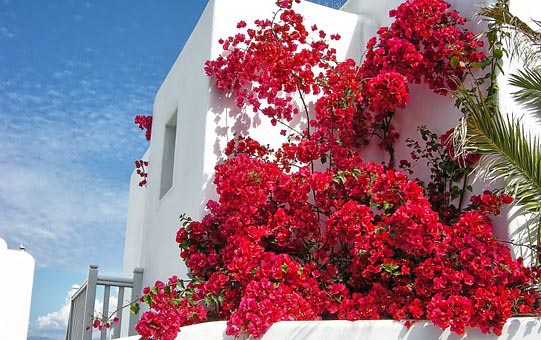
Here
the panigyria, the saints' feast days, are still celebrated. These little
festivals lend respite from the rhythms of daily life. Local families
provide simple foods and wines, then local musicians come and everyone
has an opportunity to dance.
Only
on Mykonos island will you see a donkey laden with produce, heading to
market pass by an internationally known actress. In this playground of
old and new, rural and developed, people know they can relax and play.
Top
|