Tourists
flock to discover the amazing sights of Prague by Paul
McIndoe
After the split of
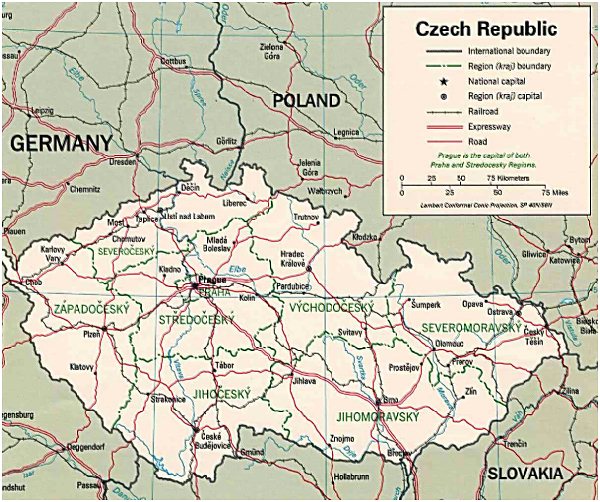
Czechoslovakia in 1993, Prague was named the capital of the new Czech
Republic. The city grew to be an important cultural centre of Europe and
is now the sixth most visited city in Europe after London, Rome, Paris,
Madrid and Berlin.
The
city suffered considerably less damage during World War II than many
other major cities in the region, allowing most of its historic
architecture to stay true to form, one of the main reasons why thousands
of people visit Prague every year.
Visitors
to Prague have a whole host of historic attractions to take in and enjoy.
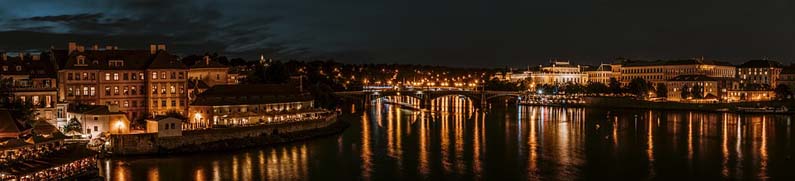
Perhaps the most scenic of all is the Charles Bridge that crosses the
Vltava River, connecting Prague's Old Town to the Lesser Quarter, one of
Prague's oldest boroughs, with a continuous alley of 30 baroque statues
lining the bridge. At night the bridge offers quiet solitude, allowing
visitors to take in the beautiful view of the Vltava and the areas either
side of it - a direct contrast to the hustle and bustle of the bridge
during the day, as kiosk owners, street artists and musicians compete for
the attentions of tourists and residents crossing the bridge.
The
Old Town also features an array of stunning attractions. The original
place of settlement of Prague, it was separated from the outside by a
semi-circular moat and wall before the expansion of the city in the 14th
century.
The
moat and wall were dismantled soon after and are now covered by
streets.
Records
dating back to 1100 indicate that the Old Town Square was the site of a
market every Saturday and also large military gatherings.
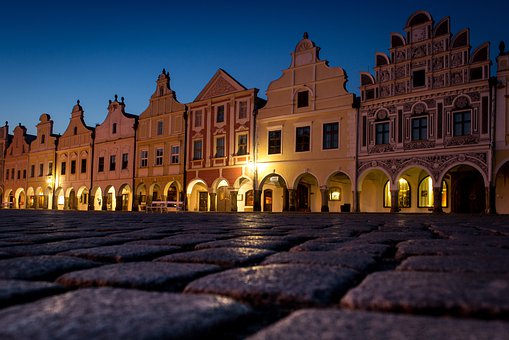
Visitors
to the area can enjoy the sights of the medieval Astronomical Clock. The
clock features an astronomical dial representing the position of the sun
and the moon in the sky as well as "The Walk of the Apostles",
a clockwork hourly show of figures of the Apostles and other moving
sculptures. Many very reasonably priced bars, restaurants and shops can
also be found in the Old Town, making it a popular destination for those
who make the journey to Prague.
Perhaps
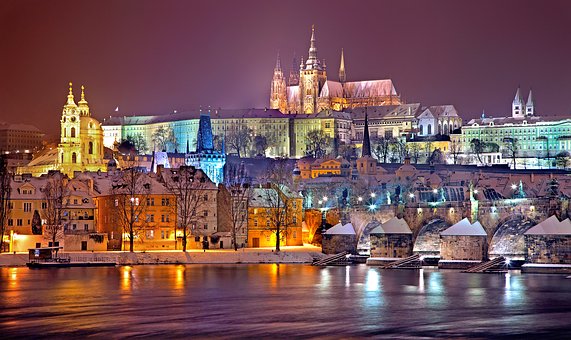
the most awe inspiring sight Prague offers is Prague Castle, where Czech
kings, Holy Roman emperors and the presidents of the Czech Republic have
all had their offices, with the crown jewels of the Bohemia Kingdom also
kept there.
More
impressive than the Castle itself is St. Vitus Cathedral, which is
contained within the Castle walls.
One of,
if not the most impressive examples of gothic architecture in the world,
the Cathedral was founded in the 14th century when the Prague bishopric
was raised to archbishopric. St. Vitus Cathedral has many fascinating
places for tourists to visit. From St. Wenceslas Chapel - where the
relics of the saint are kept - to the tombs of many Bohemian Kings
underneath the Cathedral, this attraction is a treat for any history or
architecture enthusiasts.
The
Czech Republic has re-invented itself considerably since the days of
Communist rule, with the country embracing tourists and much of Western
culture as evidenced by the shops, restaurants and luxury hotels in
Prague. Despite these changes, however, the most endearing aspect of
Prague remains its history, illustrated by the stunning architecture and
natural beauty of the city.
top
|