|
Estonia Travel Guide:
Tallinn,
Estonia. A Great Place to Visit for Vacation or Business
Visiting
Tallinn
Visiting
Tallinn by Orson Johnson
Tallinn is the capital of
Estonia, and sits on the edge of the Baltic Sea, across the waters from
Finland and Sweden, two countries that have played a big part in the
development of this fascinating city.
Tallinn
is a lot more than just another former Russian town; the name itself -
taani Linn means 'Danish city', and one of its great attractions is the
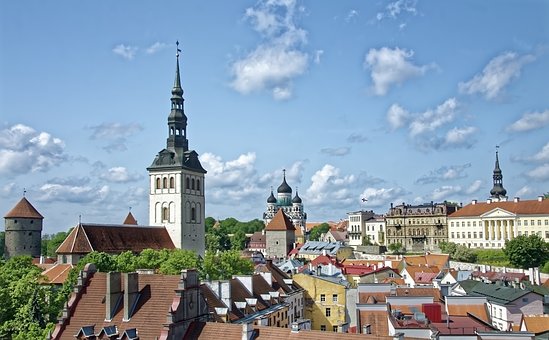
number of medieval buildings and structures which still stand, looking
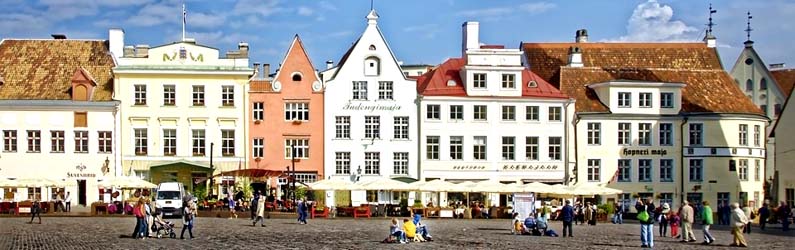
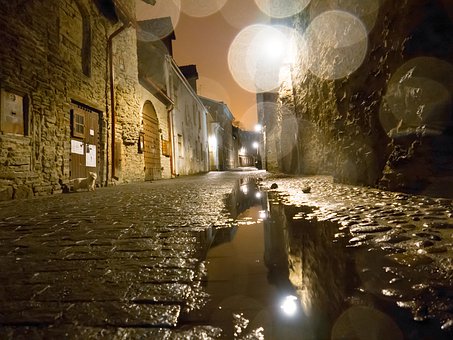
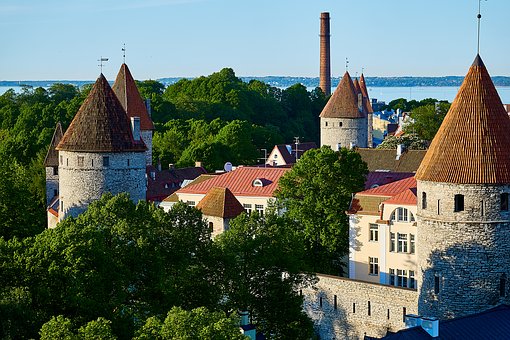
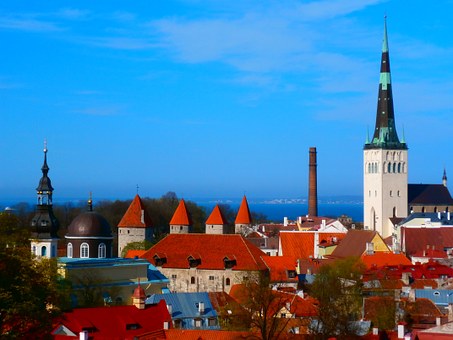
today as they did 400 years ago. The area known as the 'Lower Town' is
one of the best preserved medieval towns in Europe, and well worth going
to see- the wall tower known as 'fat Margaret' is astonishing, and it is
easy to see why it got that name. For those with an interest in other
periods of history, there is the Palace of Peter the Great, which houses
part of the Estonian Museum of Art, and fantastic woodlands and formal
gardens. It is also possible to visit the fantastic churches in the area,
which range from unaltered 13th century chapels to the Alexander Nevsky
Cathedral, built at the end of the nineteenth century, and a fantastic
piece of Russian-style architecture in white and red.
Tallinn's
tourist board knows this well, and has created an all-inclusive 'city
card', which allows you free access to Tallinn's main tourist sights, and
tours that are available (including the Tallinn Official Sightseeing
Tour), discounts in restaurants and stores, and other freebies and
offers. The price is still quite cheap (60 EEK, which converts to about 5
dollars, for 6 hrs free access), and this more than pays for itself at
each historic site, and it is very convenient to use, which is always a
plus. Since UNESCO made Tallinn a World Heritage Site at the end of the
last century, and the fantastic historic town, Tallinn has become a
tourist haven, and English is very common amongst people working in the
tourist industry, As well as a fascinating history, Tallinn is also
notable for its exciting night life. It's brilliant clubs and attractions
make Tallinn's party scene a magnet for people all over Europe. Just a
short trip from Helsinki, Tallinn is a frequent host to scores of Finns
who head over every year on 'booze cruises' in order to take in Tallinn's
cheaper alcohol. Whether your idea of a party is sipping cocktails with
Scandinavian tourists, watching Rugby in an English-themed bar, or
visiting the cool strip club, Tallinn has a place for every kind of
party-goer.
It has
become very popular with the English crowd, and there are travel agencies
dedicated to promoting partying. Walking down the streets of the Old Town,
you are likely to come across British partiers, moving between the beer
halls, or going to one of the adventure sessions the travel agencies
provide, such as parachute jumping and shooting galleries. If neither
medieval splendour nor wild nights out interest you, then there are
plenty of other reasons to visit the exciting city of Tallinn. The
capital is developing a name for itself as the host of film festivals
like no other. The Black Nights Film Festival ('Poff' in Estonian), is
held around November/December every year, and its films are a mixture of
all kinds of world cinema. If you consider yourself a film buff, that is
definitely one event you won't want to miss out on Tallinn Black Night
Film Festival.
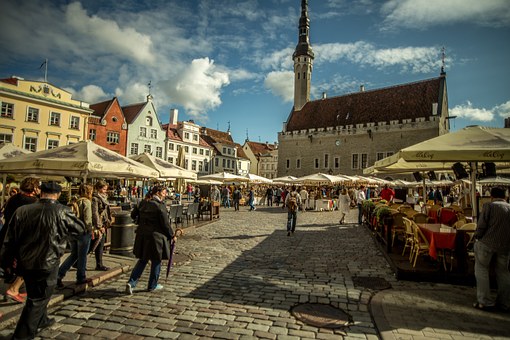
There
are other cultural specials available in Tallinn as well, from the famous
Opera House to the Art Museum of Estonia (which is actually scattered
over the town, with even the foreign paintings collection containing
nearly 1000 pieces of art.
Whatever
you do in Estonia, you should realise that you will be starving by the
time you sit down to dinner. Walking around the medieval streets can
certainly take it out of you! The good news is that Tallinn boasts some
great restaurants, as well as some very, um, interesting ones. If you're
feeling brave, then you might want to head down to a restaurant that serves
Estonian food - and if you like blood sausage and smoked herring, then
you can't go wrong. For the less brave, there are extravagant restaurants
such as the 'Olde Hansa', which provides a medieval banquet that no-one
will ever eat all of, or you could try the fusion food heaven of
'Pegasus', which is as ambitious as the name sounds.
There
is a new emphasis upon cuisine in the Estonian capital, and there are
restaurants to cater for every taste, from Mexican to Japanese. While you
are in Tallinn, it would be a shame not to visit one of the great Russian
Restaurants, such as 'Nevskij', a beautiful restaurant which can only
take you back to the luxury of Tsarist Russian empire, truly in keeping
with a place where history and the modern travel experience unite.
top
|
Tallinn,
Estonia. A Great Place to Visit for Vacation or Business by
Michael Johnson
Tallinn
Tallinn,
the capital of Estonia, is well known for her fully preserved medieval
Old Town and a pulsating nightlife. Recently many stylish places for
eating and drinking have sprung up in Tallinn, many of them offering
decent quality food, and it is not hard to find a place for dancing.
Those who travel out of the city will get acquainted with our beautiful
countryside (for instance, Estonia is known as the land of 1000 islands),
the long seashore, the picturesque Baltic German manor houses etc. And
there are not many cities whose face is designed by the 21st century
rather than the 18th or 19th.
Situation
Tallinn
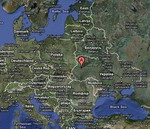
is situated in Northern Europe in the northeastern part of the Baltic Sea
region. Its unique position between the high-tech Nordic countries and
Russia, which her huge natural resources as well as an enormous market,
has made the city an attractive place for investors from all over the
world. Foreign investments into Estonia amounted to 189.7 billion kroons
as of June 2004, making Estonia the most successful country in Eastern
Europe in this respect Distances from some European cities (by plane):
*
Helsinki 82km
* Riga
280km
* St
Petersburg 315km
*
Stockholm 380km
*
Copenhagen and Moscow 860km
* Berlin
1030km.
Tallinn
Top Culture Events
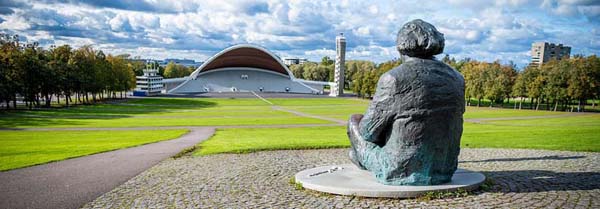
The
top summer event in Tallinn is the Old Town Days in the first week of
June; in December the Black Nights Film Festival brings the best of the
year's European films to Tallinn, and there are a lot of other annual
cultural events like Jazzkaar, Orient, NYYD, and more,
Economic
Life
About
half of the GDP of Estonia is produced in Tallinn (and its Suburbs) and
more than half of the foreign-owned companies reside here. The economy is
boosted by close relations with Finland and Sweden and a liberal economy
that is favorable to foreign investments. Rapid development of the
communications infrastructure has created a situation where mobile
technologies and the Internet are used more widely than in some larger
and wealthier EU countries (e.g. Internet banking is used by more than
10% of the population, active users of the Internet are more than 50% of
the whole population, every second Estonian has a mobile phone etc,
e-government and e-tax system are working etc). The projected economic
growth for this year is 5.9% The GNP per capita Estonia in 2004 was 40%
of the EU average (39% in Lithuania, 34% in Latvia)
Inhabitants
Tallinn
has about 400,000 inhabitants, half of whom are Estonians 40% Russians
and 10% other nationalities. You probably didn't know that there are over
120 nationalities living in Estonia. The major ethnic groups are
Russians, Byelorussians, Ukrainians, Finns, Tatars, Latvians, Poles,
Jews, Lithuanians, Germans and Armenians. Basically every third
inhabitant of Estonia speaks some other language.
Short
History
* 10th
century: ancient Estonians have already established the central trading
point on the coast of the Gulf of Finland.
* 1219:
Northern Estonia is conquered by the Danes. led by King Waldemar 2nd, who
later establishes a stone castle at Toompea -multinational town grows
around it.
* 1248:
Tallinn acquires town rights.
*
1219-1346: the Danish period. A network of streets is formed inside the
town wall, with a guild house, churches and convents, warehouses and
defense buildings.
*
1347-1561: the Livonian Order acts as the sovereign; the building of the
Old Town with its principal stone buildings is completed * 1561-1710: the
Swedish period Tallinn's trading success has faded because of long
lasting wars.
* 1710:
Tallinn capitulates to the Russian Army (Great Northern War).
* 1857:
An important evolution in the town's development was caused by the loss
of stronghold status and the building of a railway connection to St
Petersburg. Rapid industrial development begins, resulting in the swift
growth of the town.
*
February 24. 1918: the Estonian Salvation Committee declares the
independent democratic Republic of Estonia. The new government
immediately has to organize a defense against the attacking Russian
bolshevist troops and the Estonian War of Independence begins. It ends in
1920.
* 1920:
Tallinn becomes the capital of the independent Republic of Estonia.
* June,
1940: Soviet troops occupy Estonia, abolishing its independence and
establishing Soviet order.
*
1944-1991: Estonia belongs to the Soviet Union.
.1st
August 20, 1991: the Supreme Soviet of Estonia declares re-establishment
of the independence of Estonia based on legal continuity.
* August
29. 1994: the last troops of Russian army are withdrawn from Estonia. The
Second World War has come to an end for Estonia.
* May 1.
2004: Estonia joins the European Union.
Vacation
apartments for rent at www.this-way.org/tallinnapartment.
top
About
the Author: Michael Johnson lives in Tallinn he welcomes you to stay in
one of his Tallinn studio apartments in the city center where modern
interiors and security blend with old town charm. Enjoy the best of
Tallinn for less than the cost of an hotel!
|