Travel Guide to Chile:
5
Fun Facts to Know About Chile
A
Hiking Guide to Easter Island
Chile:
Land of Poets
Chile
Travel: Visiting the Lake District from Puerto Varas
Chile
Travel Destinations & Places To Visit in Chile
Concepcion
Guide
Discover
the beauty of San Pedro de Atacama
History
and Growth of Santiago de Chile
History
of Chile
Sightseeing
in Punta Arenas - Chile
Revealing
the Valleys of Chile
Swept
Away In Santiago De Chile
The
Mythology of Easter Island
Travel
to Valparaiso, Chile
A Hiking Guide to Easter
Island by David Stanley
Ask me
which Pacific island has the most to offer hikers and I'll probably
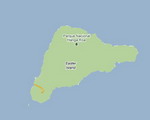
answer Easter Island. Here on an island 11 km wide and 23 km long you'll
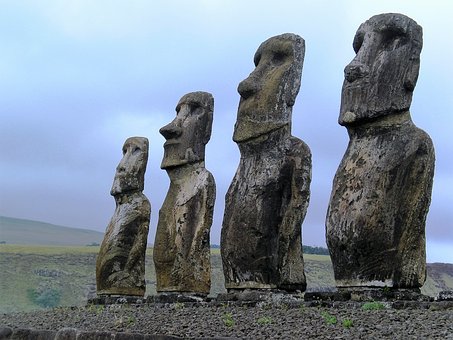
find nearly a thousand ancient Polynesian statues strewn along a
powerfully beautiful coastline or littering the slopes of an extinct
volcano.
The
legends of Easter Island have been recounted many times. What's less
known is that the island's assorted wonders are easily accessible on foot
from the comfort of the only settlement, Hanga Roa. Before setting out
see the sights, however, visit the excellent archaeological museum next
to Ahu Tahai on the north side of town (the term "ahu" refers
to an ancient stone platform). Aside from the exhibits, the museum has
maps which can help you plan your trip. On online map is available at
http://www.mapsouthpacific.com/easter_island/
The
first morning after arrival, I suggest you climb Easter Island's most
spectacular volcano, Rano Kau, where Orongo, a major archaeological site,
sits on the crater's rim. But rather than marching straight up the main
road to the crater, look for the unmarked shortcut trail off a driveway
to the right just past the forestry station south of town.
It
takes under two hours to cover the six km from Hanga Roa to Orongo, but bring along a picnic
lunch and make a day of it. (If climbing a 316-meter hill sounds
daunting, you can take a taxi to the summit for around US$6 and easily
walk back later in the day.)
Once
on top, you'll find hiking down into the colourful crater presents no
difficulty. It may also look easy to go right around the crater rim, but
only do so if you're a very experienced hiker and have a companion along
as sheer 250-meter cliffs drop into the sea from the ridge.
Another
day, rise early and take a taxi to lovely Anakena Beach at the end of the
paved road on the north side of the island (you should pay under US$10
for the 20 km). A few of the famous Easter Island statues have been
restored at Anakena and you could go for a swim, although the main reason
you've come is the chance to trek back to Hanga Roa around the road-free
northwest corner of the island.
You'll
pass numerous abandoned statues lying facedown where they fell, and the
only living creatures you're unlikely to encounter are the small brown
hawks which will watch you intently from perches on nearby rocks. If you
keep moving, you'll arrive back in town in five or six hours (but take
adequate food, water, and sunscreen). This is probably the finest coastal
walk in the South Pacific.
Almost
as good is the hike along the south coast, although you're bound to run
into other tourists here as a paved highway follows the shore. Begin early
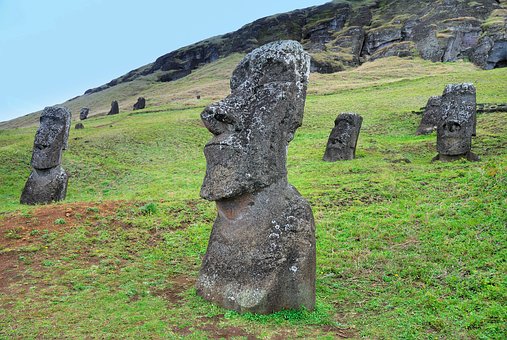
and catch a taxi to Rano Raraku, the stone quarry where all of the
island's statues were born. This is easily the island's most spectacular
sight with 397 statues in various stages of completion lying scattered
around the crater. And each day large tour groups come to Rano Raraku to
sightsee and have lunch. However, if you arrive before 9 am, you'll have
the site to yourself for a few hours. When you see the first tour buses
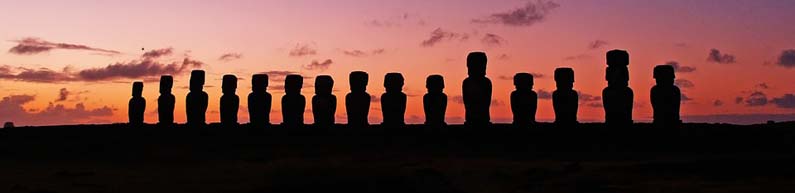
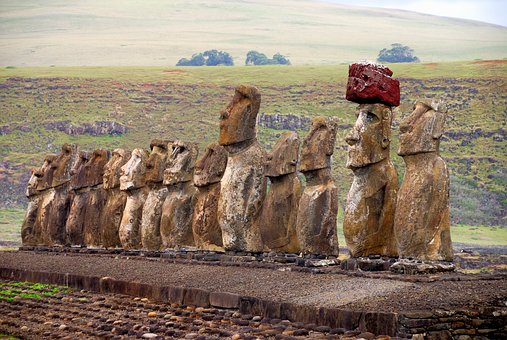
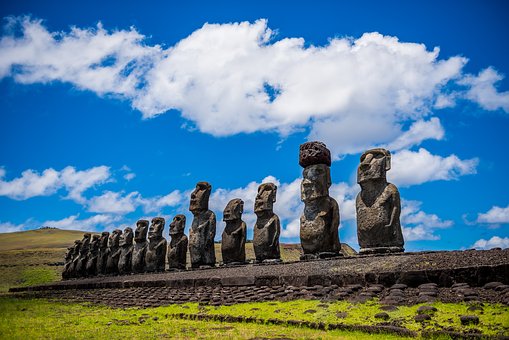
headed your way, hike down to Ahu Tongariki on the coast, where 15
massive statues were reerected in 1994. From here, just start walking
back toward Hanga Roa (20 km) along the south coast. You'll pass many
fallen statues and enjoy some superb scenery. Whenever you get tired,
simply go up onto the highway and stick out your thumb and you'll be back
in town in a jiffy.
An
outstanding 13-km walk begins at the museum and follows the west coast
five km north to Ahu Tepeu.
As
elsewhere, keep your eyes pealed for banana trees growing out of the
barren rocks as these often indicate caves you can explore. Inland from
Ahu Tepeu is one of the island's most photographed sites, Ahu Akivi, with
seven statues restored in 1960. From here an interior farm road runs
straight back to town (study the maps at the museum carefully, as you'll
go far out of your way if you choose the wrong road here).
A
shorter hike takes you up Puna Pau, a smaller crater which provided stone
for the red topknots that originally crowned the island's statues.
There's a great view of Hanga Roa from the three crosses on an adjacent
hill and you can easily do it all in half a day. A different walk takes
you right around the 3,353-meter airport runway, which crosses the island
just south of town.
Near
the east end of the runway is Ahu Vinapu with perfectly fitted monolithic
stonework bearing an uncanny resemblance to similar constructions in
Peru.
Easter
Island's moderate climate and scant vegetation make for easy cross
country hiking, and you won't find yourself blocked by fences and private
property signs very often. You could also tour the island by mountain
bike, available from several locations at US$10 a day. If you surf or
scuba dive, there are many opportunities here. A minimum of five days are
needed to see the main sights of Easter Island, and two weeks would be far
better. The variety of things to see and do will surprise you, and you'll
be blessed with some unforgettable memories.
Top
|