|
Featured travel blogs:
 Take a trip
to the fascinating Galapagos Islands off Ecuador’s coast Take a trip
to the fascinating Galapagos Islands off Ecuador’s coast
The
Galapagos Islands are a UNESCO World Heritage site, situated in the
Pacific Ocean around 1,000 km off the Ecuadorian coast. The archipelago
of islands and the surrounding huge marine reserve has been dubbed a
unique "living museum and showcase of evolution” ... read more
|
|
 4 Fascinating Attractions In Ecuador 4 Fascinating Attractions In Ecuador
Ecuador straddles the
equator on the west coast of South America and has a fascinating and
diverse landscape. Here you can experience the Andean highlands, the
Amazon jungle and the fascinating Galápagos Islands with their many
species of wildlife... read
more
|
Birds of
Galapagos Islands
Ecuador,
a Paradise for the lovers of Photography
Galapagos
Tours - 5 Mistakes To Avoid
Major
Tourist Attractions of Guayaquil in Ecuador
Tourists'
delight Quito Ecuador travel
Up close and personal: best wildlife
holidays
For my
trip to Ecuador I wanted to speak with a local travel planner and have
the option of customizing my trip in order to include highlights but also
off the beaten path experiences in the Amazon and the Andes. I found Voyagers Travel
Ecuador , they showed really good destination knowledge and apart
from having a local office in Quito, Ecuador, they have a New Jersey
office which gave me lots of confidence. They helped me customize every
detail of my Ecuador vacation with many discounts.
Ecuador,
a Paradise for the lovers of Photography by Hugo Sandoval
I am a hardened photographer
and I have more than 15 years in this area and I want to tell you that
visiting Ecuador in South America, was a wonderful experience, mainly
because I had the aid of GRAY LINE TOURS and because I could take the
necessary time to admire and to photograph its Four Regions, and is that
Ecuador, in spite of being a relatively small country, with a 98,985 Mi2
of territory, it has "Four Worlds" clearly marked, for delight
of its visitors: Ecuadorian Coast, Ecuadorian Highlands, Amazonian Jungle
and the Galapagos Islands.
I had the
opportunity to photograph great part of those Four Worlds and is why I
want to share with you my experience.
I
initiated my trip by Ecuadorian Coast, in city of Guayaquil - Ecuador,
where is one of two international airports that this beautiful country
has, and I had the opportunity to take one of the Tours of Gray Line
Tours, in which I could appreciate and photograph this beautiful and
great city, that is second in importance of all Ecuador.
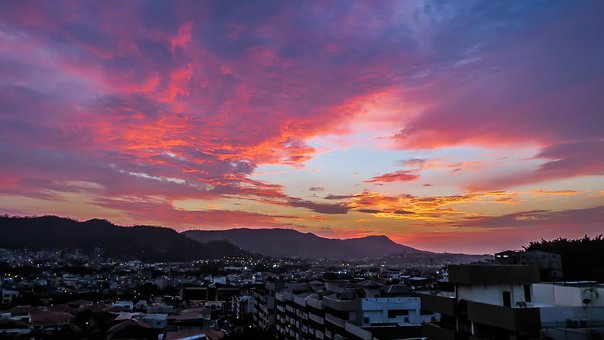
Because
Ecuador co pretty by the West with the Pacific Ocean, has a large
extension of beautiful beaches in which I could catch with my lens a
numberless of beach landscapes with impressive views of sea, rocks,
vegetation, animals, people and sunsets worthy of the paradise. Also I
can say to you that, in the zone of the Ecuadorian Coast, not only exist
beaches like tourist attraction, also we can found in this one zone
several cities and towns full of spectacular colorful and traditions and
with the aid of the Ecuador Tours that Gray Line Tours offered to me, I
could photograph each detail of these wonderful destinies.
In the
same way, I could photograph a lot of Ecuadorian history, since the
Ecuadorian coasts, are rich in cultural treasures since on its lived,
among other cultures, the Indigenous Culture of Valdivia, very important
for the Formative Period of Ecuador, therefore we found many museums in
which we can observe vestiges of this culture, mainly of the "Venus
de Valdivia", who are a representation of a woman, her activities
and live cycles, as well as several types of ceramics and rest leaved by
these cultures.
As I
had the opportunity to travel in the month of August, I take a tour to
the Plata Island, that is located 2 hours in boat from the continent, and
in the way I could capture, in my lens of course, some Humpback Whale,
that jumped one and once again of the water, filling us of emotion to all
of that we were in the boat. When we arrived at the Plata Island, my
admiration did not finish, be cause I could appreciate many species of
birds, that I thought only I will going to find days later of my trip,
when I should arrive at the Galapagos Islands.
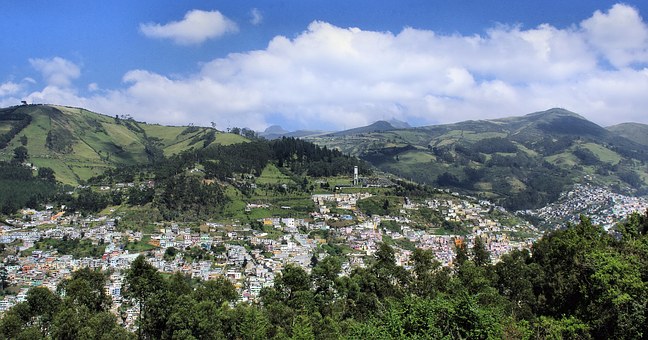
I
continued my trip by the Ecuadorian Highlands, arriving at the other one
International Airport of Ecuador, in the city of Quito - Ecuador, the
Capital and more important city of Ecuador, located to a 9,300 Ft. above
the sea level and near to the Middle of the World (length 0º), place
where the planet Earth is divided in two equal parts by the Equatorial
Line, for that reason when I arrived, I asked for my kindly guide of Gray
Line Tours make a City Tour & Equatorial Monument, one of products of
Ecuador Tours that offer Gray Line Tours and with which I could know why,
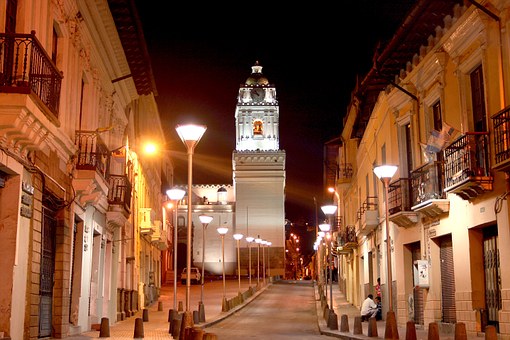
UNESCO named to Quito - Ecuador and its Historic colonial downtown like
Human Cultural Heritage, I almost could say that I photographed each
centimeter of this Cultural Heritage as well as the Famous Middle of the
World city and its monument.
In the
central part of the Ecuadorian Territory and crossed by the Mountain
range of the Andes, we found the most beautiful mountainous places, full
of culture and tradition, Archaeological Ruins, like the Inca’s
Ruins of Ingapirca (Inca’s Ruins, second in importance of the entire
world), big lagoons, some of them within old extinct volcano craters,
volcanoes, snow-covered mountains, majestic mountains, colorful cities
and populations, landscapes that I was capturing one by one with my
camera, in the day, in the afternoon, or in the night, I never let to be
admire myself with the spectacle of this particular beauty.
Among
other cities of importance, we found the third city more important of the
Ecuadorian Territory, the city of Cuenca - Ecuador, Also we found the population
of Riobamba - Ecuador, well-known by its famous " Devil’s Nose
Train ", Otavalo - Ecuador and its Indigenous Market, etc. All of
them constitute a gold mine for the photographers like me, cannot
maintain the finger taken off from the shutter of the camera.
After
my stay in the Ecuadorian Highlands, I continued my trip towards the
Amazon Jungle is one of the tourists most desired destinies, for the who
enjoy of the adventure and the old cultures, to completely far away of
the comforts and the noise of the great cities. For the lovers of the
green tonalities, let me tell you that here you can find thousands of
these tonalities, from the darkest green, to clearest and pale
ones.
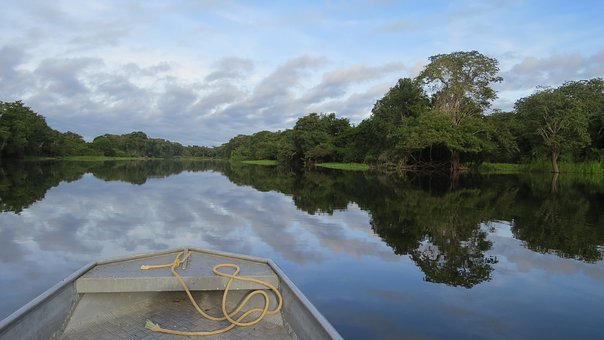
Beautiful
landscapes of a pure and virgin forest or borders of rivers, that in
their majority are affluent of the Great Amazonas River, spectacular
photos of black water rivers and its igapos, where inhabit piranhas, pink
dolphins, Caymans, boas, anacondas, etc and its sunsets with the sun
being reflected in their waters, photos which I am sure will astonish to
all that could see them, and don’t by my photographic abilities, but
rather by the images shaped in them and the facility that I had to catch
them, I am sure that any person without experience in the photography
could catch photos better than any expert, by the landscaping that this
jungle displays to us.
Before
finalizing my trip to this wonderful country and with the aid of Gray
Line Tours and its Ecuador Tours, I could know another one, according to
UNESCO, Biosphere Natural Heritage, like are the Galapagos Islands and is
that speaking of the Galapagos Islands, it is to speak of another
completely different world, where you can photograph Marine Wolves,
Iguanas, Boobies, Penguins, etc, to few meters of distance, you could
even touch them, but that it is not allowed of course.
Each
one of the islands and their submarine territory, has a flora and a
different fauna, which makes a paradise for the lovers of the photography
and mainly for the open waters divers like me, since, if they have luck
will be able to dive and to photograph the greatest Shark of the world,
the Whale Shark, that is very difficult to see in other places, also I
had the opportunity to photograph a large number of hammer sharks, rays
eagle, morays, dolphins, tropical fishes, etc, etc.
At
least, to speak of Ecuador and its Four Regions, is to speak of a country
incredibly rich landscapingly speaking, that complemented with their
biodiversity, habitats, human heat, etc, make it perfect for the
photography and the tourism.
top
About
the Author: Hugo Sandoval is chief editor of Grayline Ecuador. If you are
planning to visit Ecuador please visit www.graylineecuador.com
|
Birds of Galapagos
Islands by Todd Sarouhan
Galapagos Birds
Located some 1000 km from the
coast of Ecuador, the Galapagos Islands are a fascinating group of tiny
islands to explore. Pristine and remote, these islands are perfect for nature
lovers who get to see some of the most rare and endangered wildlife
species on the planet, roam free and unafraid amidst the rugged volcanic
landscape here. The wildlife in the Galapagos is indeed unique as most of
the animals here wander without fear even around human visitors because
of the lack of natural predators.
Birds
are the most common residents of the Galapagos, with over 58 species of
birds found here. While 28 of the Galapagos' birds are endemic, the other
30 are migratory species that visit the islands at different times during
the year. If you are an avid bird enthusiast, or enjoy bird watching then
the Galapagos Islands is a great place to come and see birds fly
uninhibited in their natural habitat. If you are a keen observer, you can
note up 40 bird species as you tour the Galapagos.
Galapagos Birds - Sea
A wide variety of sea birds
can be found in the Galapagos Islands, the most magnificent of which is
the Waved Albatross. The largest bird in the archipelago, the waved
albatross has a wingspan of 2.4 meters. A joy to watch while it is
flying, the courtship of this bird is also something special.
The
Flightless Cormorant is endemic to the Galapagos Islands and is the only
flightless seabird in the world. Found on Islas Isabel and Fernandina,
these birds have small wings and strong powerful legs.
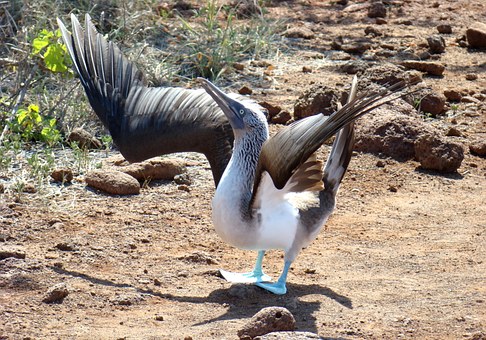
Boobies
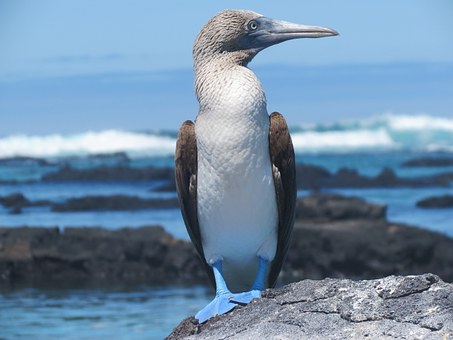
are the most common birds in the Galapagos though they are not endemic to
these islands. The blue footed booby, the red footed booby and the masked
booby can all be seen on Isla San Cristobel.
The
Magnificent Frigatebird and the Great Frigatebird are a treat to watch
with their incredible acrobatic flying. With their huge wingspan, both
these birds can be easily spotted by their red skin that hangs under
their necks.
The
Galapagos penguins are the only equatorial penguins in the world. As you
dive and snorkel near Islas Fernandina and Isabel, you can spot them
gracefully swimming buy. Some other popular sea birds in the Galapagos
are the red-billed tropicbird, the swallow-tailed gull, the lava gull,
the brown pelican, Audubon's shearwater and storm petrels.
Galapagos Birds - Wetlands
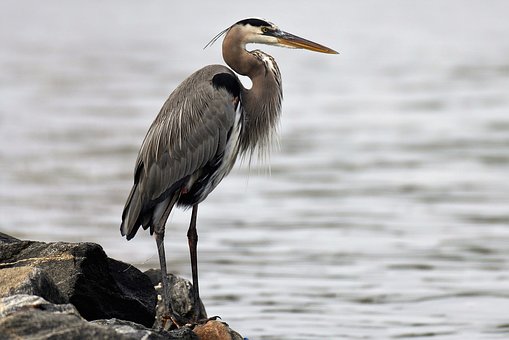
The Great Blue Heron is the
largest heron in the Galapagos. You can spot this huge bird on almost all
of the Galapagos Islands. The lava heron is the only endemic bird of this
species in the Galapagos and can usually be spotted hunting along the
lava shorelines.
Flamingoes,
American oystercatchers, stilts and sandpipers are some of the other
common wetland birds found here.
Galapagos Birds - Land
The most famous land birds in
the Galapagos have to be Darwin's finches. With 13 species, these finches
are credited to have helped Darwin formulate his theory of evolution. The
Galapagos hawk is another endemic land bird. Extremely fearless,
unfortunately this hawk is now an endangered species, with just a few
hundred remaining in the wild.
The
Galapagos Flycatcher, the barn owl, the Galapagos mockingbirds and the
dark-billed cuckoo are some other well known land birds in the Galapagos.
Browse
accommodation in the Galapagos Islands
top
|
Galapagos
Tours - 5 Mistakes To Avoid
If you're thinking about
visiting the Galapagos Islands, you're in for a treat. Made famous by
Charles Darwin's voyage on the Beagle in the 19th century, the Islands
lie 972 km west of mainland Ecuador in the Pacific Ocean. Undiscovered by
mankind until relatively recently, you'll see a fantastic range of flora
and fauna in ecosystems that exist nowhere else on the planet.
However
there are a couple of pitfalls to travelling to the Galapagos Islands and
also while you are on your stay. Here are five things you are best
avoiding.
1) Missing your plane from
Ecuador
The vast majority of tourists
arrive at Galapagos by plane. It is only possible to reach the islands by
a flight from mainland Ecuador starting in either Quito or Guayaquil.
International flights do not go directly to the Islands. If you are
flying, make sure your seat doesn't get given away to someone else
by:
-
Checking in more than an hour before take-off
-
Planning your international arrival to Ecuador at least a day before your
departure flights to the Galapagos to give yourself time between
connections (If you miss the start of your cruise there is no way to
catch up!)
2) Taking a tour with an
unqualified guide
Conservation on the islands is
of critical importance, and the best people to maintain standards are the
tour guides. They should help keep you on the marked pathways and assist
in communicating and enforcing conservation rules.
Visitors
to the Galapagos Islands should be guided at all times by a qualified
individual. In your group shouldn't be more that 16 people, to allow good
control and guidance of tourists. They should also give you information
about general water safety and supervise all swimming and snorkeling.
3) Touching animals
It's tempting, but visitors
should not interact with animals on the Galapagos Islands. The majority
of animals on the Galapagos have no reason to fear humans, and
consequently will allow visitors to get very close without bolting.
However,
you should go no closer than within two meters of animals, as in some
cases they will follow you, leaving their nests uncovered, exposing eggs
or chicks to the sun. Additionally, no animals should be fed or baited on
water or land.
4) Introducing new species to
the islands
Introducing any exotic
organisms to Galapagos could have a devastating effect on the ecosystems
that exist in a state of delicate balance. Any food, animal and vegetable
products as well as seeds, plants or fresh flowers should be declared
before leaving the airport at Quito or Guayaquil so that a trained
inspector can deem if they are safe or not. Any form of live animals are
also not allowed.
The
same rules apply for inter-island visits; each island is its own unique
ecosystem, so introductions between islands can be just as devastating to
the natural process of things as items from the mainland.
5) Lighting fires
In 1985, Isabel Island
suffered severe damage from negligence with smoking and fire lighting.
Surprisingly, in 1994, almost a decade later, the same thing happened
again. Even though a beach fire seems like the perfect end to a day on an
exotic island adventure, visitors should resist the urge to build a camp
fire.
Browse
accommodation in the Galapagos Islands
top
|