Travel Guide to Chile:
5
Fun Facts to Know About Chile
A
Hiking Guide to Easter Island
Chile:
Land of Poets
Chile
Travel: Visiting the Lake District from Puerto Varas
Chile
Travel Destinations & Places To Visit in Chile
Concepcion
Guide
Discover
the beauty of San Pedro de Atacama
History
and Growth of Santiago de Chile
History
of Chile
Sightseeing
in Punta Arenas - Chile
Revealing
the Valleys of Chile
Swept
Away In Santiago De Chile
The
Mythology of Easter Island
Travel
to Valparaiso, Chile
History and Growth of Santiago
de Chile by Hortense Soulier
Santiago
de Chile, capital of Chile, is arguably one of the most attractive
capitals in Latin and Central America. Far from the chaos found in most
major cities on the continent, such as Lima or Mexico, Santiago is a beautifully
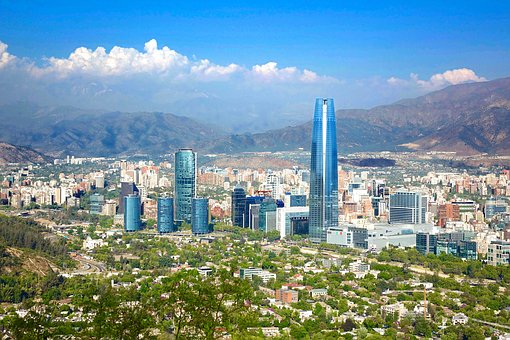
city, modern, extremely well maintained with great infrastructures, and
countless attractions to keep visitors entertained for days.
The
city also boasts a fascinating history, and has grown through the ages to
become what it is now, the center of all culture, economics, and politics
in Chile. Santiago was founded in February 1541 by Pedro de Valdivia, on
the site of a former indigenous settlement between the southern bank of
the Rio Mapocho and the Cerro Santa Lucia. This strategic location also
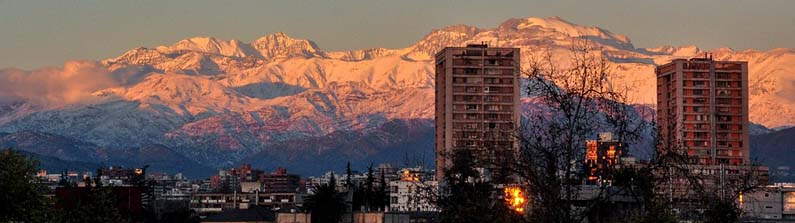
makes for a magical backdrop, with the city dominated by the nearby
Andean range.
At
first, Santiago was far from a major hub, and was only one of the many
Spanish administrative and cultural outposts in the colonial period. Some
other important centers in the era include Concepcion in the South and La
Serena in the north of the country. Nevertheless, the city continually
grew and evolved to become one the main centers, with 12 churches built
by the mid-17th century - only one of which survived the devastating
earthquake that destroyed most of Santiago in 1618). Another massive
earthquake was responsible for extensive destruction in 1730.
The
city started taking on its role as a leading center for culture and
politics after Chile declared its independence form the Spanish Crown. In
the 1870's, under the Indente, or regional governor, Benjamin Vicuna
MacKenna, the city was entirely redesigned.
An
urban plan was drafted, transforming Cerro Santa Lucia into a public park
and building tramway lines for public transportation.
The
Chilean elite also started settling in the city, with the wealthy from
mining and shipping building mansions in the western part of Santiago.
Most colonial buildings were gradually replaced throughout the 20th
century as the city modernized itself and grew ever more rapidly by the
end of the century.
Like
most Latin American capitals, Santiago underwent massive expansion, but
the city has somehow managed to control this enormous growth and make
Santiago one of the most modern metropolitan areas on the
continent.
Extensive
suburbs, dozens of shopping malls, and impressive sky scrapers fill the
city. The transportation infrastructure is also extremely modern, with a
well organized bus system as well as an underground Metro.
Top
|